
 Image 1 of 9
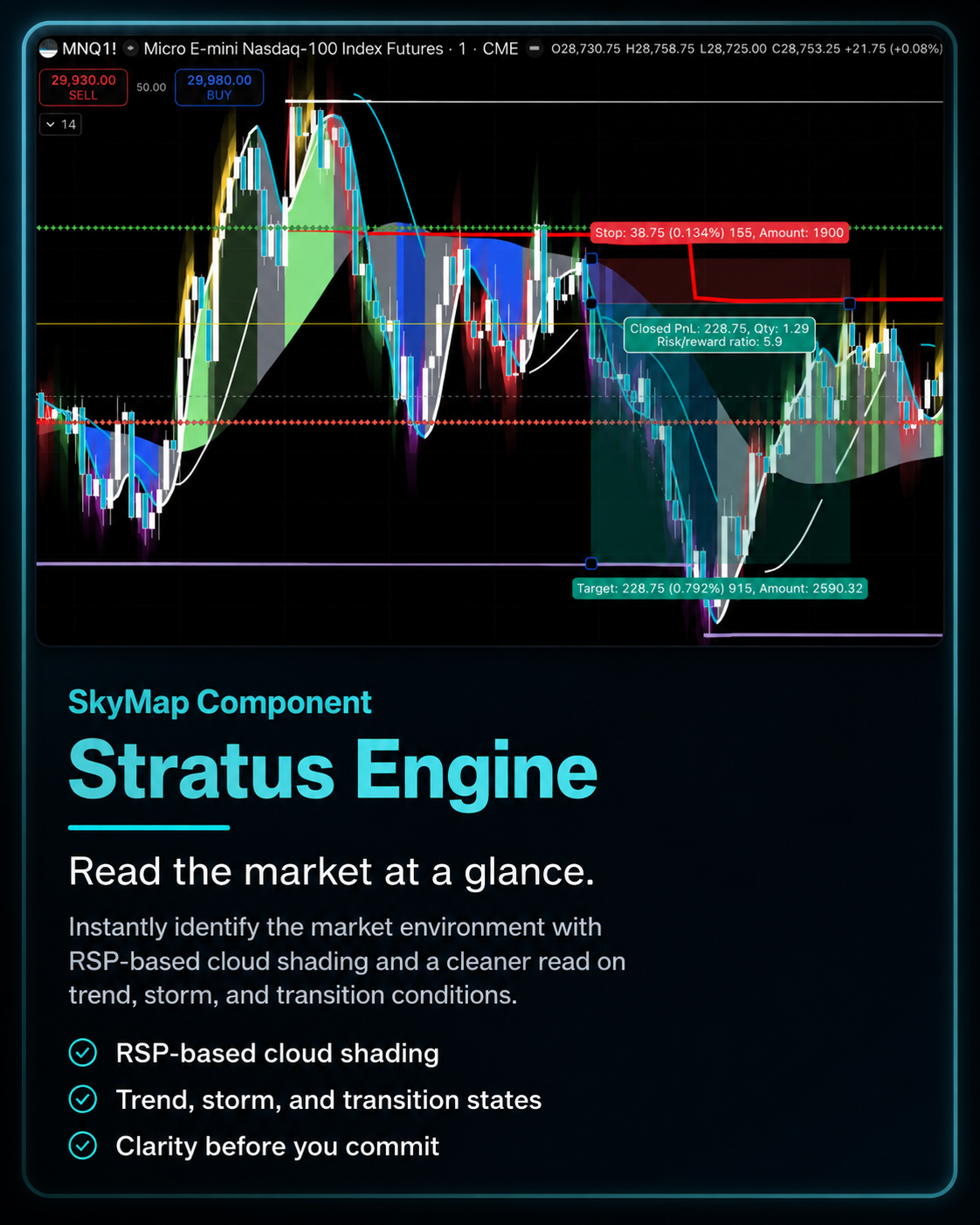 Image 2 of 9
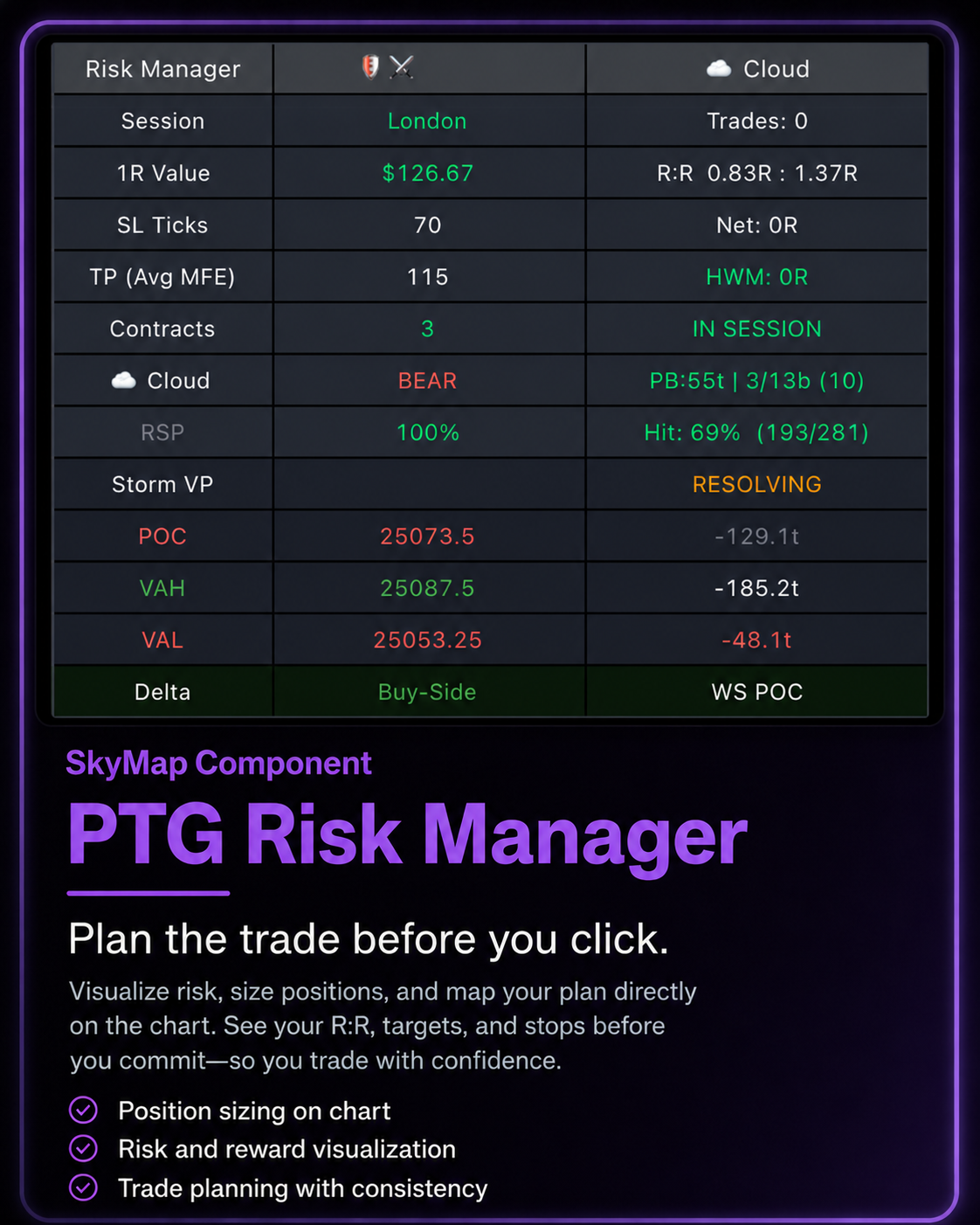 Image 3 of 9
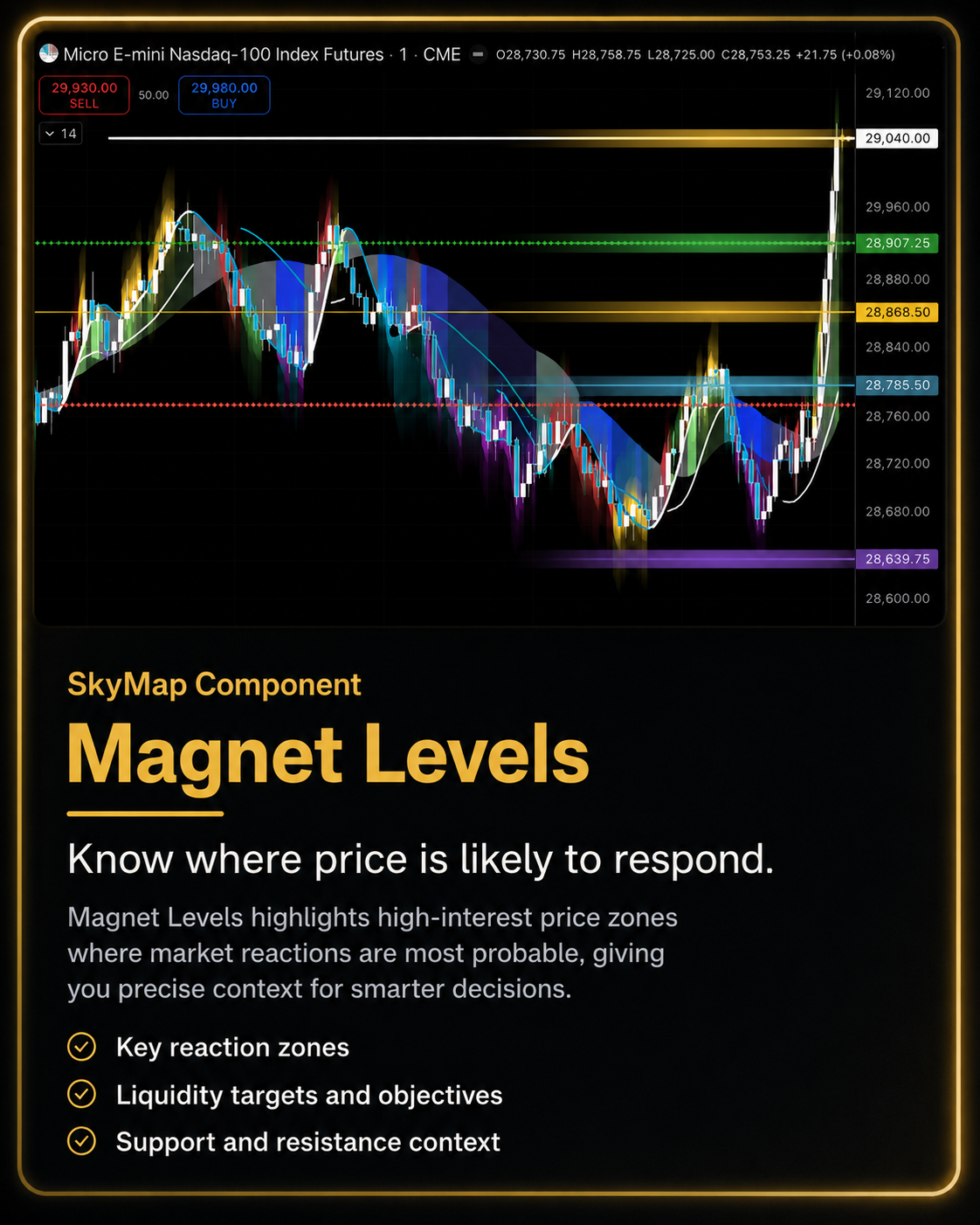 Image 4 of 9
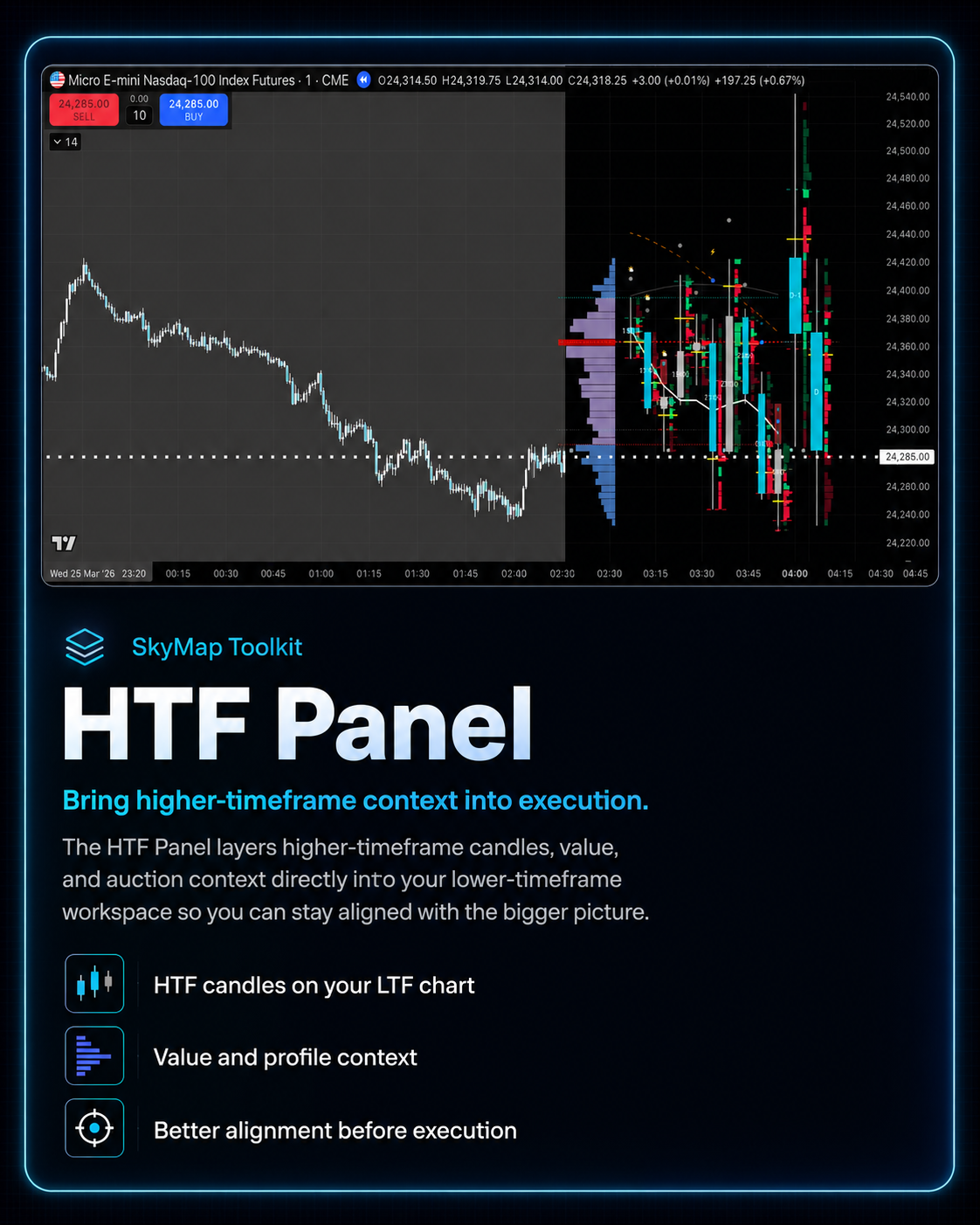 Image 5 of 9
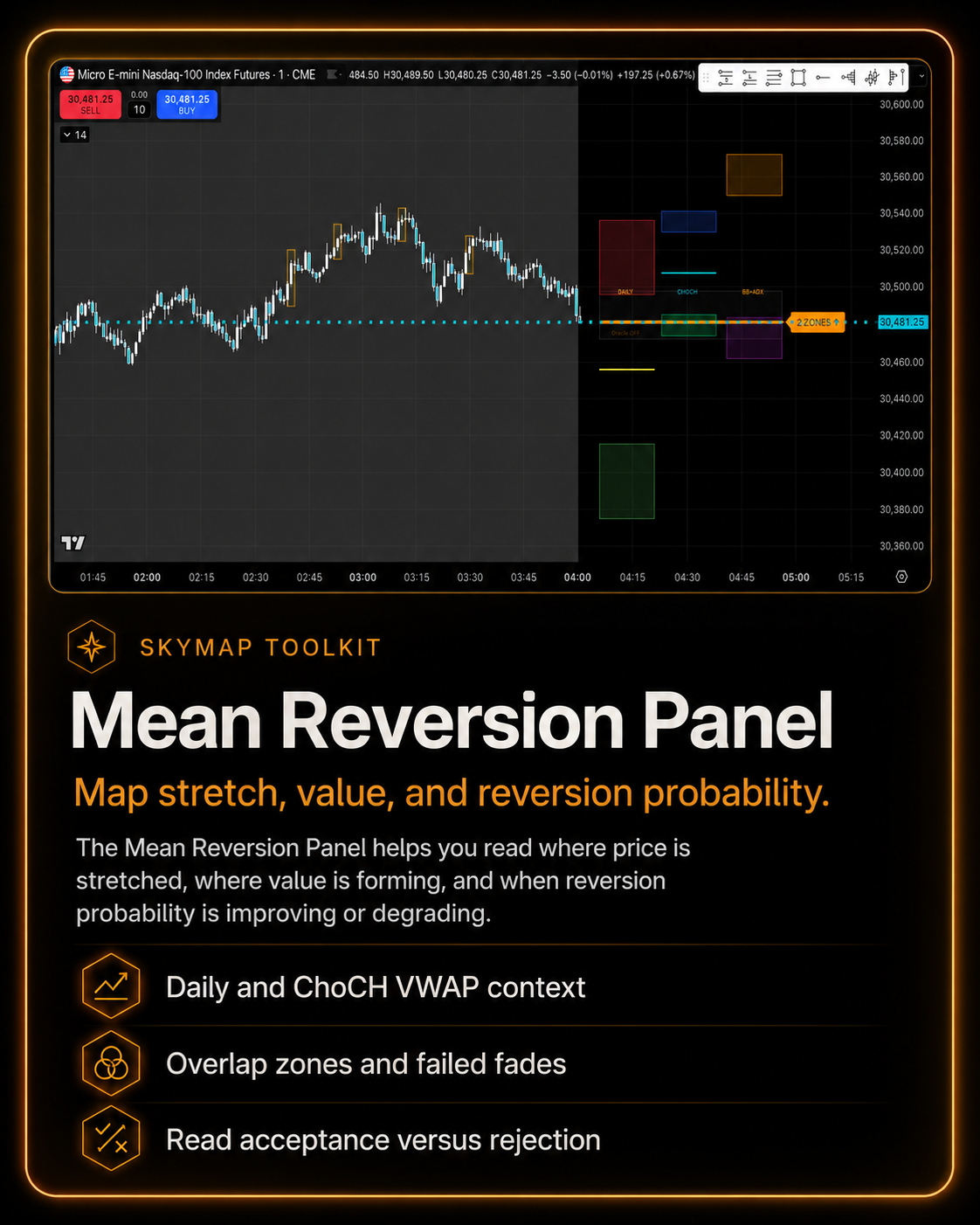 Image 6 of 9
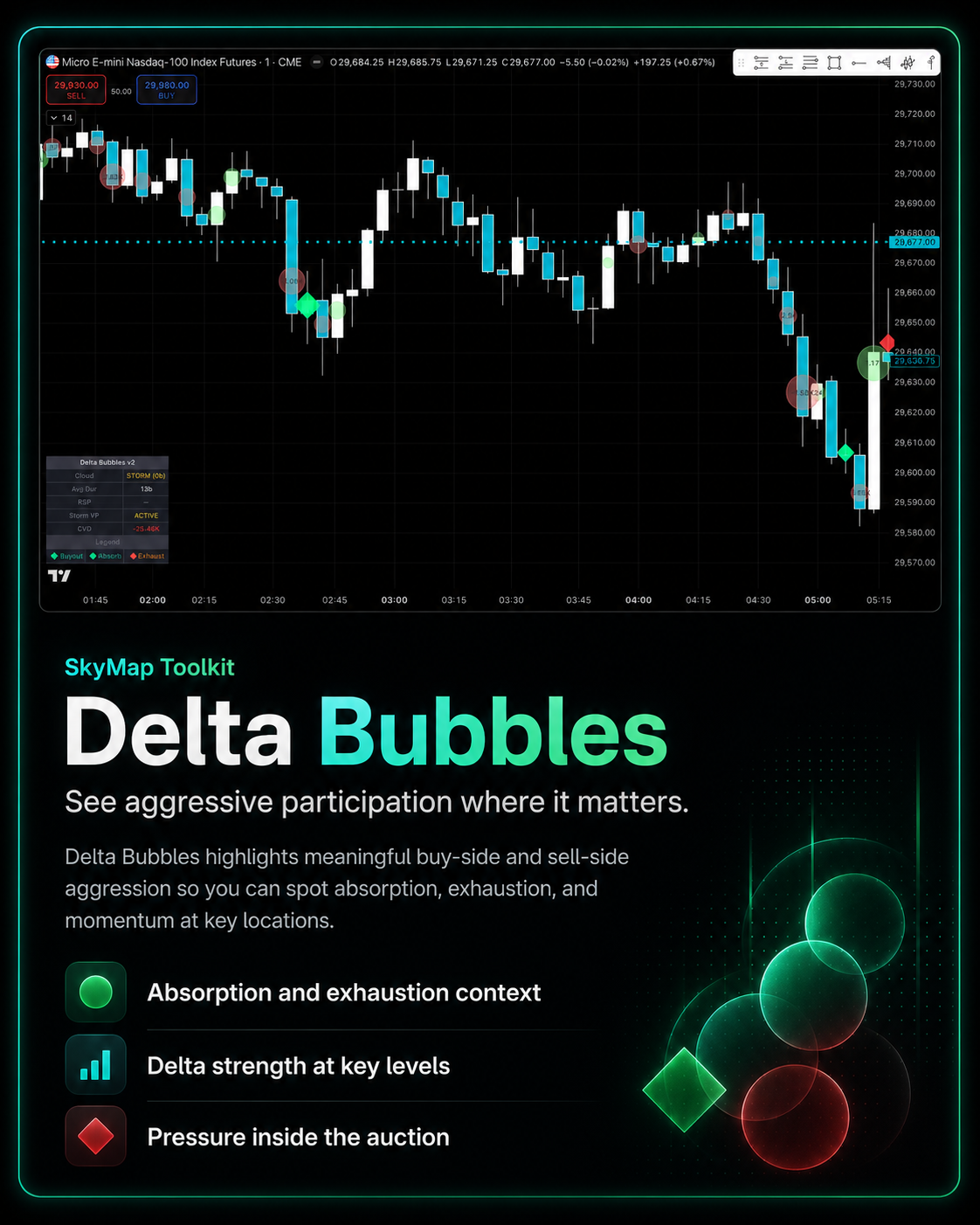 Image 7 of 9
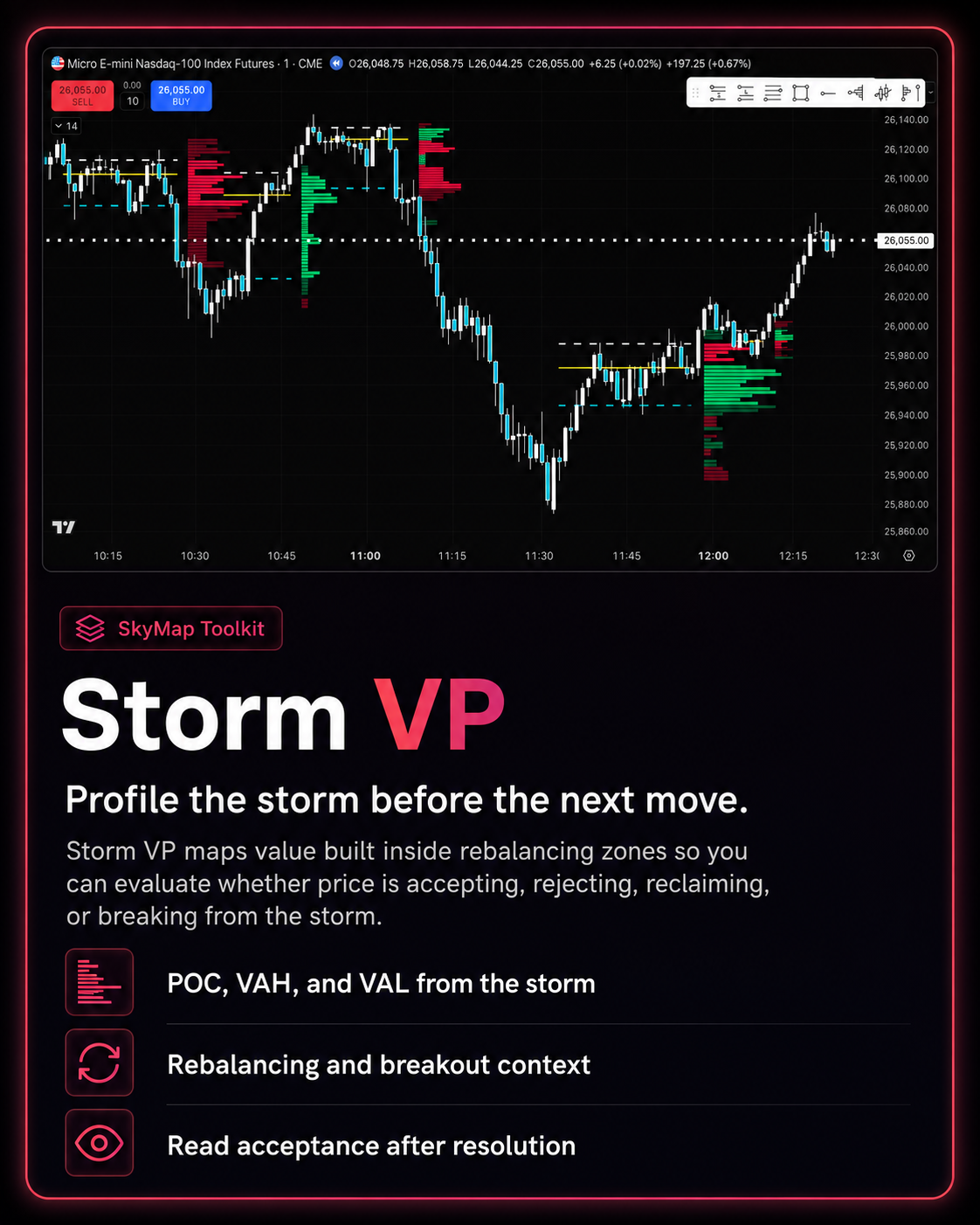 Image 8 of 9
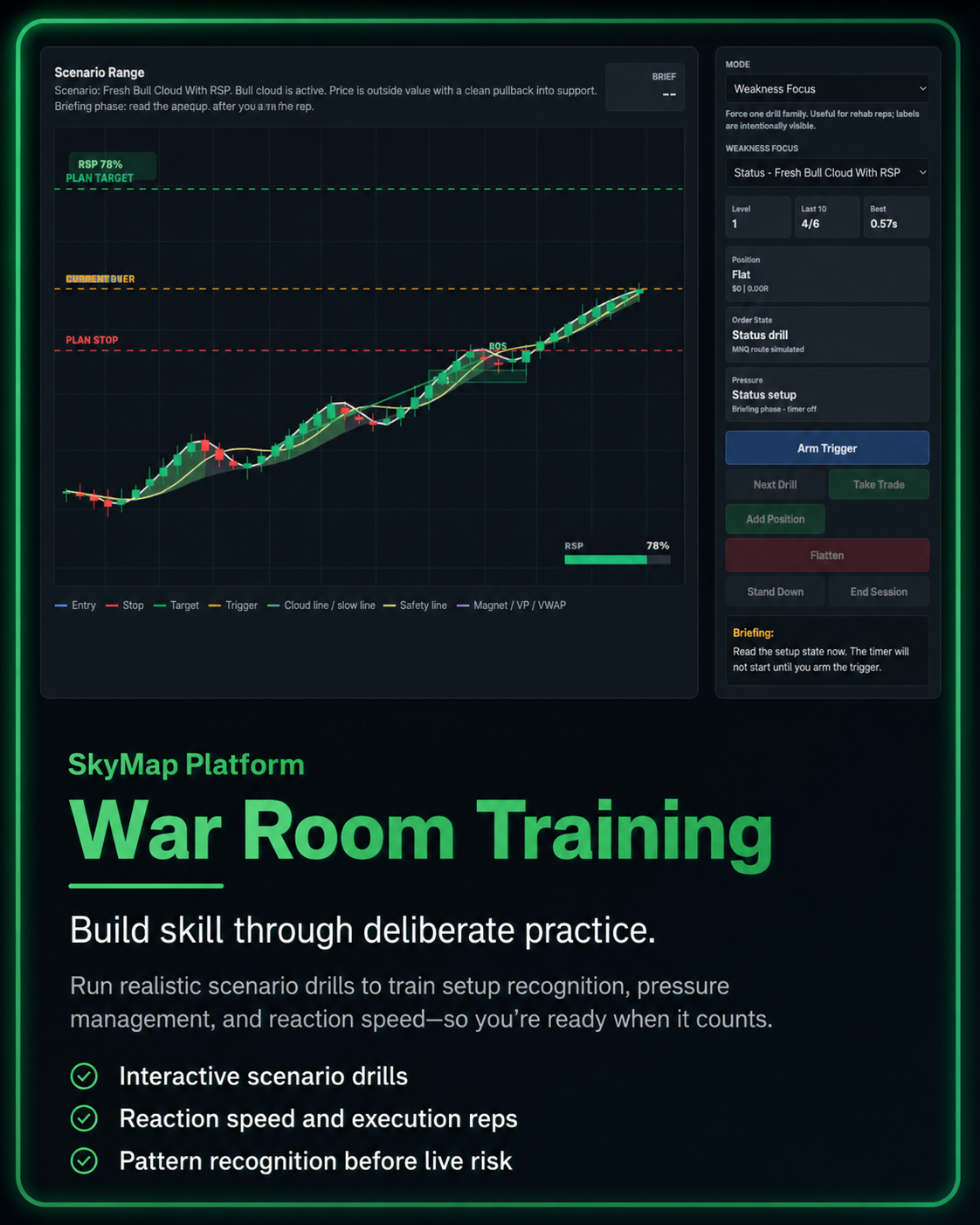 Image 9 of 9
SkyMap Complete Trading Framework
SkyMap Complete Framework
The complete Strategic Edge trading system.
Stop buying disconnected indicators.
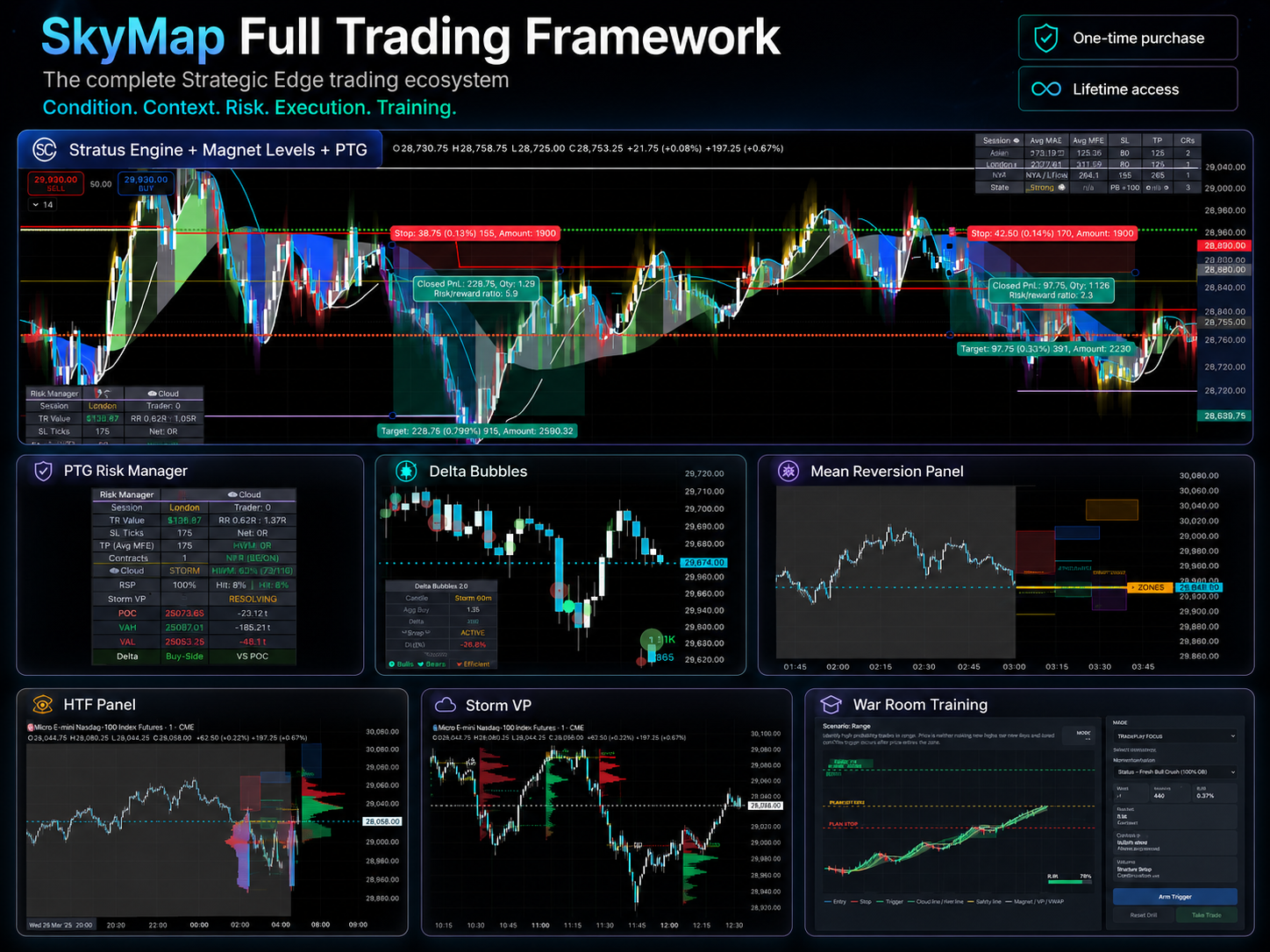
The SkyMap Complete Framework gives you the full Strategic Edge ecosystem: market condition tools, risk management, magnet levels, mean reversion context, orderflow confirmation, volume profile structure, setup training, and War Room scenario drills.
This is not a signal service.
This is not a collection of random scripts.
This is a full trading framework designed to help you answer the questions that matter before you put capital at risk:
What state is the market in?
Is this environment worth trading?
Where is price likely to react?
Is the auction accepting, rejecting, trapping, or continuing?
Is there clean room to target?
Where is the trade wrong?
Does the reward justify the risk?
Have I trained this decision before?
The SkyMap Complete Framework brings the full process together.
Read the environment. Identify opportunity. Define risk. Execute with discipline. Train the reps before live pressure.
What’s Included
SkyMap Stratus Engine
Read the market at a glance.
The Stratus Engine helps classify market conditions using cloud-based market state logic, giving traders a cleaner way to understand whether the market is organized, unresolved, fresh, or spent.
Use Stratus to identify:
Bullish and bearish cloud states
Storm, transition, and chop conditions
Fresh directional environments
Late or exhausted directional movement
RSP-based cloud potential
When to lean in and when to stand down
The first decision is not where to enter.
The first decision is whether the market environment deserves your attention.
Magnet Levels
Know where price is likely to respond.
Magnet Levels identify high-attention price areas that can act as targets, reaction zones, sweep levels, invalidation references, or trade-planning destinations.
Use Magnet Levels to map:
Key reaction areas
Logical profit targets
Sweep zones
Support and resistance context
Invalidation references
Price objectives before entry
A level is not an automatic trade.
A level is a place where the trader knows to pay attention.
PTG Risk Manager
Plan the trade before you click.
PTG stands for Protect The Gold.
The PTG Risk Manager is the risk and session-governance layer of the framework. It helps traders define position size, plan stops and targets, evaluate reward-to-risk, track session state, and avoid trades that do not meet the risk standard.
Use PTG to manage:
1R risk planning
Position sizing
Stop and target structure
Reward-to-risk evaluation
Session state
Bracket discipline
Trade permission
Kill switch awareness
A good chart read does not make a bad bet valid.
If the risk fails, the trade fails.
Mean Reversion Panel
Map stretch, value, and reversion probability.
The Mean Reversion Panel helps traders identify where reversion probability may exist and where that probability may be degrading.
Instead of fading price just because it is extended, the panel gives context around daily anchored VWAP, ChoCH-anchored VWAP, BB + ADX zones, overlap zones, and failed-zone behavior.
Use the Mean Reversion Panel to evaluate:
Stretch conditions
VWAP-based value context
ChoCH-anchored displacement
Multi-model overlap zones
Failed fade areas
Acceptance versus rejection
When mean reversion is improving
When mean reversion is no longer the right thesis
Not every extended market is ready to reverse.
Sometimes price is stretched.
Sometimes value is migrating.
The panel helps you tell the difference.
HTF Panel
Bring higher-timeframe context into your execution chart.
The HTF Panel helps traders see the bigger auction without constantly flipping timeframes. It brings higher-timeframe candle structure, Stratus state, value context, volume profile, delta footprint behavior, and auction alignment directly into the lower-timeframe workspace.
Use the HTF Panel to answer:
Is the higher timeframe supporting the trade?
Is value building above or below price?
Are buyers or sellers trapped?
Is the lower-timeframe setup aligned with the larger auction?
Is this a real opportunity or just noise inside a bigger move?
Better execution starts with better context.
Delta Volume Bubbles
See aggressive participation where it matters.
Delta Volume Bubbles highlight meaningful buy-side and sell-side aggression directly on the chart, helping traders evaluate pressure, absorption, exhaustion, breakout behavior, and trapped participation.
Use Delta Bubbles to identify:
Aggressive buying and selling
Absorption
Exhaustion
Breakout pressure
Ignition behavior
Delta strength
Participation at key levels
Potential trapped traders
Bubble size alone is not a trade.
The question is where it printed, how price responded, and whether the rest of the stack agrees.
Storm VP
Profile the storm before the next move.
Storm VP maps value built inside unresolved, rebalancing, or consolidating market conditions.
When the market enters storm behavior, price is often building or redistributing value. Storm VP helps identify where that value accumulated, then gives traders POC, VAH, and VAL references after the storm resolves.
Use Storm VP to evaluate:
Storm value areas
POC, VAH, and VAL from the storm
Rebalancing zones
Breakout context
Failed continuation attempts
Acceptance outside the storm
Reclaims and rejections
Trapped buyers or sellers inside the storm
Storms are not just chop.
They are where the next auction can be built.
War Room Training Platform
Tools do not create skill.
Training does.
The Strategic Edge War Room gives traders an interactive practice environment built around scenario drills, setup recognition, adverse-condition response, risk discipline, and reaction-speed training.
Use the War Room to drill:
Valid trade execution
Stand-down decisions
Emergency exits
Bracket-failure response
Setup recognition
Add management
Risk-rule enforcement
Pressure and impulse control
The goal is not to become dependent on signals.
The goal is to build the ability to recognize the state, name the setup, define the risk, and execute the trained action without freelancing.
How The Complete Framework Works
The SkyMap Complete Framework combines two essential layers:
1. Permission System
This is the risk layer.
Before a trade is allowed, the trader must understand the setup, stop, target, size, reward-to-risk, session state, and whether PTG allows the action.
No chart read overrides failed risk.
2. Opportunity System
This is the market-read layer.
SkyMap tools help classify market weather, map reaction levels, read value, identify pressure, evaluate higher-timeframe context, and determine whether the setup has a clean path to target.
The strongest trades happen when the layers agree:
Setup
Location
Value
Pressure
Weather
Higher timeframe
Risk
No single indicator owns the decision.
The framework is built to help you assemble the full trade thesis before execution.
Built For Traders Who Want A Process
The SkyMap Complete Framework is designed for traders who:
Overtrade poor market conditions
Enter without a complete thesis
Struggle to define risk before entry
Fade moves too early
Chase trends too late
Get chopped up in storm conditions
Ignore higher-timeframe context
Need better target and invalidation planning
Want structured training instead of random screen time
Prefer process-based trading over signal chasing
What You’ll Learn To Do
With the full framework and War Room training, you’ll learn how to:
Classify market conditions
Identify fresh versus spent directional movement
Recognize storm and rebalancing environments
Map magnet levels and price objectives
Read value through VWAP and volume profile context
Identify absorption, exhaustion, breakout pressure, and traps
Align lower-timeframe execution with higher-timeframe auction context
Define valid risk before entry
Reject invalid trades even when the read looks good
Train execution responses through repeated scenario drills
Included In The Complete Package
SkyMap Stratus Engine
Magnet Levels
PTG Risk Manager
Mean Reversion Panel
HTF Panel
Delta Volume Bubbles
Storm VP
War Room Training Platform
Scenario-based training drills
Strategic Edge SOPs and playbooks
Framework updates included with this package
Why Complete?
The Stratus Engine System helps answer:
“Should I be trading this environment?”
The Mean Reversion & Orderflow Toolkit helps answer:
“What is the auction doing inside this environment?”
The PTG Risk Manager helps answer:
“Is this trade allowed?”
The War Room helps train:
“Can I execute the correct action under pressure?”
The Complete Framework gives you the full stack.
Condition. Location. Value. Pressure. Higher timeframe. Risk. Training.
Everything works together.
One-Time Purchase. Lifetime Access.
No monthly subscription.
No recurring billing.
Buy the Complete SkyMap Framework once and get permanent access to the complete Strategic Edge toolset and training ecosystem included with this package.
Important Note
Strategic Edge tools are educational and performance-training tools. They do not provide financial advice, investment advice, or live trade recommendations. Every trader is responsible for their own trades, risk, and platform use.
SkyMap Complete Framework
The complete Strategic Edge trading system.
Stop buying disconnected indicators.
The SkyMap Complete Framework gives you the full Strategic Edge ecosystem: market condition tools, risk management, magnet levels, mean reversion context, orderflow confirmation, volume profile structure, setup training, and War Room scenario drills.
This is not a signal service.
This is not a collection of random scripts.
This is a full trading framework designed to help you answer the questions that matter before you put capital at risk:
What state is the market in?
Is this environment worth trading?
Where is price likely to react?
Is the auction accepting, rejecting, trapping, or continuing?
Is there clean room to target?
Where is the trade wrong?
Does the reward justify the risk?
Have I trained this decision before?
The SkyMap Complete Framework brings the full process together.
Read the environment. Identify opportunity. Define risk. Execute with discipline. Train the reps before live pressure.
What’s Included
SkyMap Stratus Engine
Read the market at a glance.
The Stratus Engine helps classify market conditions using cloud-based market state logic, giving traders a cleaner way to understand whether the market is organized, unresolved, fresh, or spent.
Use Stratus to identify:
Bullish and bearish cloud states
Storm, transition, and chop conditions
Fresh directional environments
Late or exhausted directional movement
RSP-based cloud potential
When to lean in and when to stand down
The first decision is not where to enter.
The first decision is whether the market environment deserves your attention.
Magnet Levels
Know where price is likely to respond.
Magnet Levels identify high-attention price areas that can act as targets, reaction zones, sweep levels, invalidation references, or trade-planning destinations.
Use Magnet Levels to map:
Key reaction areas
Logical profit targets
Sweep zones
Support and resistance context
Invalidation references
Price objectives before entry
A level is not an automatic trade.
A level is a place where the trader knows to pay attention.
PTG Risk Manager
Plan the trade before you click.
PTG stands for Protect The Gold.
The PTG Risk Manager is the risk and session-governance layer of the framework. It helps traders define position size, plan stops and targets, evaluate reward-to-risk, track session state, and avoid trades that do not meet the risk standard.
Use PTG to manage:
1R risk planning
Position sizing
Stop and target structure
Reward-to-risk evaluation
Session state
Bracket discipline
Trade permission
Kill switch awareness
A good chart read does not make a bad bet valid.
If the risk fails, the trade fails.
Mean Reversion Panel
Map stretch, value, and reversion probability.
The Mean Reversion Panel helps traders identify where reversion probability may exist and where that probability may be degrading.
Instead of fading price just because it is extended, the panel gives context around daily anchored VWAP, ChoCH-anchored VWAP, BB + ADX zones, overlap zones, and failed-zone behavior.
Use the Mean Reversion Panel to evaluate:
Stretch conditions
VWAP-based value context
ChoCH-anchored displacement
Multi-model overlap zones
Failed fade areas
Acceptance versus rejection
When mean reversion is improving
When mean reversion is no longer the right thesis
Not every extended market is ready to reverse.
Sometimes price is stretched.
Sometimes value is migrating.
The panel helps you tell the difference.
HTF Panel
Bring higher-timeframe context into your execution chart.
The HTF Panel helps traders see the bigger auction without constantly flipping timeframes. It brings higher-timeframe candle structure, Stratus state, value context, volume profile, delta footprint behavior, and auction alignment directly into the lower-timeframe workspace.
Use the HTF Panel to answer:
Is the higher timeframe supporting the trade?
Is value building above or below price?
Are buyers or sellers trapped?
Is the lower-timeframe setup aligned with the larger auction?
Is this a real opportunity or just noise inside a bigger move?
Better execution starts with better context.
Delta Volume Bubbles
See aggressive participation where it matters.
Delta Volume Bubbles highlight meaningful buy-side and sell-side aggression directly on the chart, helping traders evaluate pressure, absorption, exhaustion, breakout behavior, and trapped participation.
Use Delta Bubbles to identify:
Aggressive buying and selling
Absorption
Exhaustion
Breakout pressure
Ignition behavior
Delta strength
Participation at key levels
Potential trapped traders
Bubble size alone is not a trade.
The question is where it printed, how price responded, and whether the rest of the stack agrees.
Storm VP
Profile the storm before the next move.
Storm VP maps value built inside unresolved, rebalancing, or consolidating market conditions.
When the market enters storm behavior, price is often building or redistributing value. Storm VP helps identify where that value accumulated, then gives traders POC, VAH, and VAL references after the storm resolves.
Use Storm VP to evaluate:
Storm value areas
POC, VAH, and VAL from the storm
Rebalancing zones
Breakout context
Failed continuation attempts
Acceptance outside the storm
Reclaims and rejections
Trapped buyers or sellers inside the storm
Storms are not just chop.
They are where the next auction can be built.
War Room Training Platform
Tools do not create skill.
Training does.
The Strategic Edge War Room gives traders an interactive practice environment built around scenario drills, setup recognition, adverse-condition response, risk discipline, and reaction-speed training.
Use the War Room to drill:
Valid trade execution
Stand-down decisions
Emergency exits
Bracket-failure response
Setup recognition
Add management
Risk-rule enforcement
Pressure and impulse control
The goal is not to become dependent on signals.
The goal is to build the ability to recognize the state, name the setup, define the risk, and execute the trained action without freelancing.
How The Complete Framework Works
The SkyMap Complete Framework combines two essential layers:
1. Permission System
This is the risk layer.
Before a trade is allowed, the trader must understand the setup, stop, target, size, reward-to-risk, session state, and whether PTG allows the action.
No chart read overrides failed risk.
2. Opportunity System
This is the market-read layer.
SkyMap tools help classify market weather, map reaction levels, read value, identify pressure, evaluate higher-timeframe context, and determine whether the setup has a clean path to target.
The strongest trades happen when the layers agree:
Setup
Location
Value
Pressure
Weather
Higher timeframe
Risk
No single indicator owns the decision.
The framework is built to help you assemble the full trade thesis before execution.
Built For Traders Who Want A Process
The SkyMap Complete Framework is designed for traders who:
Overtrade poor market conditions
Enter without a complete thesis
Struggle to define risk before entry
Fade moves too early
Chase trends too late
Get chopped up in storm conditions
Ignore higher-timeframe context
Need better target and invalidation planning
Want structured training instead of random screen time
Prefer process-based trading over signal chasing
What You’ll Learn To Do
With the full framework and War Room training, you’ll learn how to:
Classify market conditions
Identify fresh versus spent directional movement
Recognize storm and rebalancing environments
Map magnet levels and price objectives
Read value through VWAP and volume profile context
Identify absorption, exhaustion, breakout pressure, and traps
Align lower-timeframe execution with higher-timeframe auction context
Define valid risk before entry
Reject invalid trades even when the read looks good
Train execution responses through repeated scenario drills
Included In The Complete Package
SkyMap Stratus Engine
Magnet Levels
PTG Risk Manager
Mean Reversion Panel
HTF Panel
Delta Volume Bubbles
Storm VP
War Room Training Platform
Scenario-based training drills
Strategic Edge SOPs and playbooks
Framework updates included with this package
Why Complete?
The Stratus Engine System helps answer:
“Should I be trading this environment?”
The Mean Reversion & Orderflow Toolkit helps answer:
“What is the auction doing inside this environment?”
The PTG Risk Manager helps answer:
“Is this trade allowed?”
The War Room helps train:
“Can I execute the correct action under pressure?”
The Complete Framework gives you the full stack.
Condition. Location. Value. Pressure. Higher timeframe. Risk. Training.
Everything works together.
One-Time Purchase. Lifetime Access.
No monthly subscription.
No recurring billing.
Buy the Complete SkyMap Framework once and get permanent access to the complete Strategic Edge toolset and training ecosystem included with this package.
Important Note
Strategic Edge tools are educational and performance-training tools. They do not provide financial advice, investment advice, or live trade recommendations. Every trader is responsible for their own trades, risk, and platform use.